
Age is Not A Disease: Ellie’s Story
February is National Pet Dental Health Awareness Month!
To celebrate, we wanted to feature a recovery story that is very close to our hearts.
When 17-year-old Ellie, a spunky Jack Russell terrier, first came to see us at Fayetteville Veterinary Care, her family was at a crossroads. Ellie was suffering from severe advanced periodontal disease and extremely bad breath. Other veterinarians were hesitant to perform the procedure due to her age and the extent of her dental disease.
Dr. Rachel Hill’s response? “Age is not a disease.”
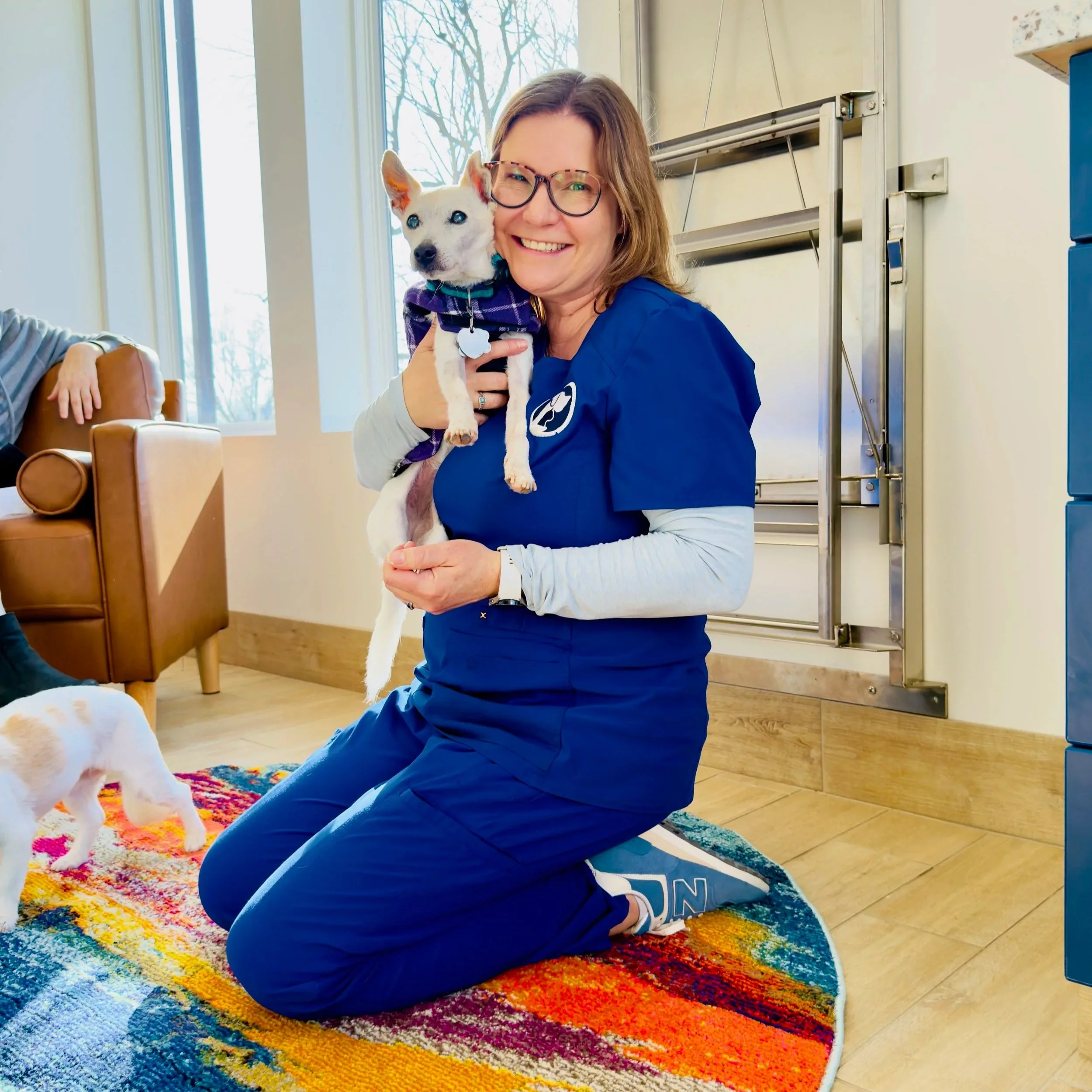
Veterinary oral surgeon Dr. Rachel Hill performing a post-surgical dental exam for a senior Jack Russell at Fayetteville Veterinary Care.
Careful Planning, Continuous Monitoring
Before her procedure, Ellie’s chronic dental pain manifested as aggression. She often snapped at her parents and 10-year-old Chihuahua sister, Lilly. She frequently regurgitated water, and her gastrointestinal tract could not tolerate anything other than prescription low-fat canned food. She was reliant on daily gabapentin to manage the discomfort and cognitive dysfunction symptoms. Dental disease in pets doesn’t just affect the mouth—it is painful and can negatively impact the function of the entire body. Ellie was struggling, and her family felt powerless watching it happen.
Dr. Hill didn’t just look at Ellie’s age when clearing her for surgery. We don’t guess; we test!
Dr. Hill ordered comprehensive lab work to check Ellie’s kidney and liver function for processing anesthesia. Ellie did have early kidney disease, but this is even more of a reason to address the infection in her mouth to prevent the spread to other vital organs, like her heart and liver.
Because Ellie is a senior, Dr. Hill also ordered chest x-rays to confirm that her heart and lungs are in good condition.
Our surgical protocols go beyond the industry standard.
During her procedure, Ellie received IV fluids to keep her kidneys happy and organs hydrated. IV fluids also help maintain blood pressure under anesthesia.
From pre to post, our surgical team monitors far more than just temperature and pulse. We continuously track multiple vital signs in real time, including respiration rate, blood pressure, oxygen and carbon dioxide levels, and more. Extensive monitoring is essential to quickly detect any changes in a patient’s condition and intervene immediately to prevent complications.
When seconds count, our network of elite specialists ensures no patient is ever "too complex." If we anticipate potential complications, we quickly coordinate a real-time telemedicine consultation with a Board-Certified Veterinary Anesthesiologist. This allows the specialist to remotely monitor the entire anesthetic procedure alongside our team for an extra layer of expert protection.
Ellie’s procedure took 4 hours total, and she had 30 decayed and abscessed teeth extracted from her mouth. Two weeks later at her post-surgical recheck, Ellie’s parents were beaming. They described her transformation as nothing short of magical. “It’s like she’s finally at peace,” Ellie’s mom shared.
What to Ask Your Veterinarian About Anesthesia
Ellie’s success was possible because of specific safety standards. If your pet—senior or otherwise—needs a procedure involving anesthesia, we encourage you to ask your veterinarian these critical questions:
Do you require pre-anesthetic blood work and/or chest x-rays for senior pets?
Are IV fluids standard for all surgical procedures to support organ health?
What specific vital signs are monitored during surgery? (Look for more than just heart rate and temperature).
Is there an experienced staff member monitoring my pet throughout the entire process?
Do you have digital dental x-rays? 60-70% of the tooth lies below the gumline, so dental x-rays are necessary for a comprehensive evaluation of your pet’s oral health.
Protect Your Pet’s Smile
Today, Ellie’s aggression is gone. She is calm, loving, and no longer needs gabapentin. Her story proves that a pet’s age is just a number. It shouldn’t prevent them from living their best, most comfortable life.
Dental disease is painful, but it doesn’t have to be. With the right prevention and medical care, our goal is to protect your pet from the discomfort of periodontal disease. Let us work with you to find an at-home oral care routine centered on your pet’s needs and lifestyle.
Dr. Rachel Hill is a confident pet oral surgeon with over 10 years of experience performing modern veterinary dentistry, including full-mouth x-rays, probing of each side of up to 42 teeth, multi-modal pain control, extractions, and gingival flap procedures. With her expertise and the assistance of our highly experienced staff, your pet’s dental health is in excellent hands.
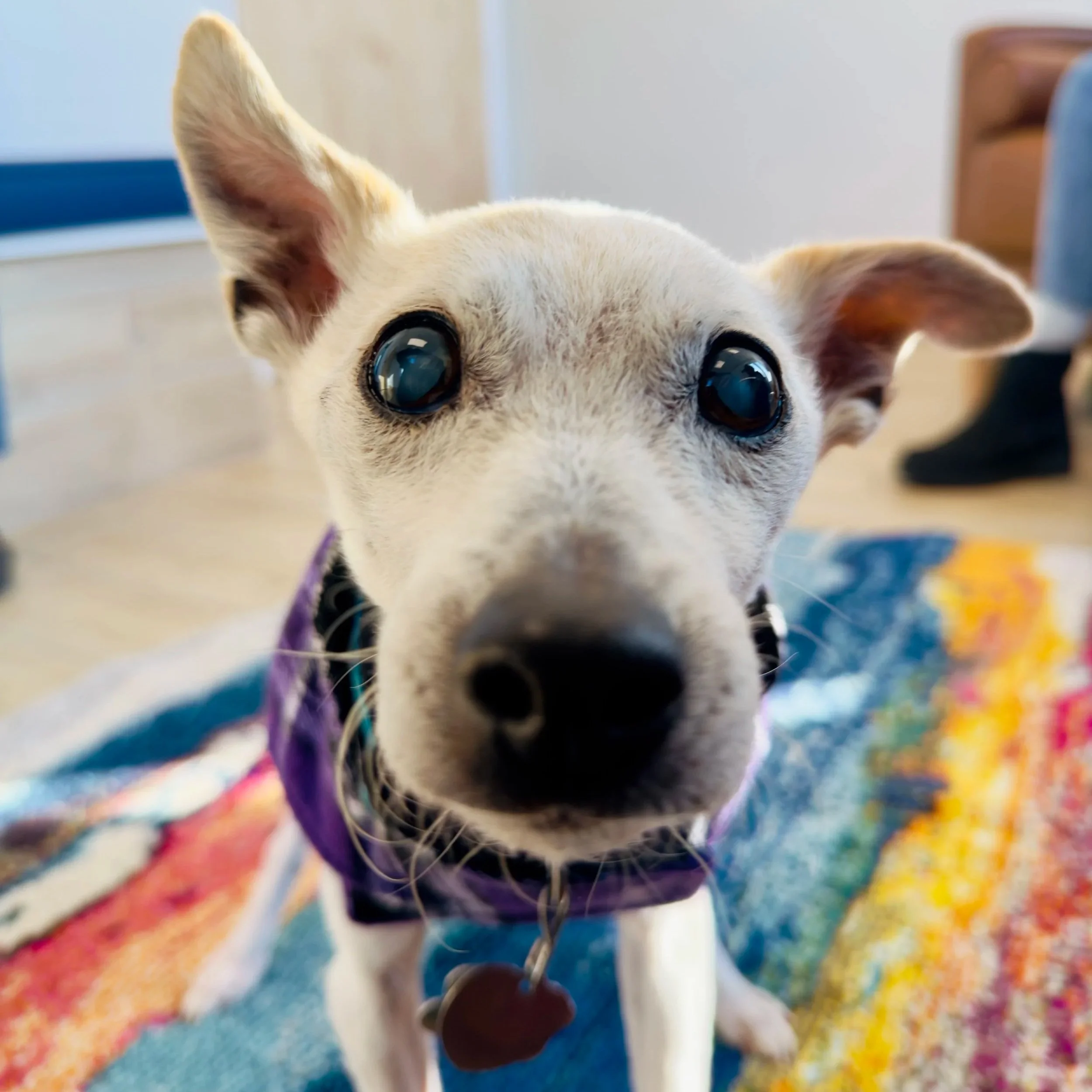
Ellie arrived early for her post-surgical dental exam to show her gratitude for the care she received at Fayetteville Veterinary Care!
Ready to experience what pet healthcare should feel like from a veterinarian you can trust?
We make it easy!
