

FVC Guide to Ozark Parasites

Whether you are hiking the bluffs at the Buffalo National River, camping at Devil’s Den State Park, or trail running Lake Wilson, our beautiful Northwest Arkansas landscape comes with a few hidden hitchhikers.
At Fayetteville Veterinary Care, Dr. Rachel Hill wants to keep your pet’s adventures stress-free. To help our neighbors stay informed, we’ve gathered the latest from the Companion Animal Parasite Council (CAPC) and American Heartworm Society (AHS) along with other key partners to keep your family protected all year-round.
As the sole owner of Fayetteville Veterinary Care, Dr. Hill is a proud member of the Independent Veterinary Practitioners Association (IVPA) and the Independent Animal Hospital Association (IAHA). Both groups empower Dr. Hill to deliver competitively priced modern veterinary medicine, in partnership with other private practices like hers, free from the profit drivers corporate veterinarians are governed by.
The key difference at FVC is that our team, led by local vet Dr. Rachel Hill, has total control over the care we provide. That means every treatment plan we develop and every prescription we write follows strict safety and efficacy protocols specifically designed for your pet's unique Northwest Arkansas lifestyle.
NWA Tick Report: Investigating the Ozark Underworld
Lurking in tall grass, spying from leaf piles, and creeping down hiking trails, ticks are silently observing their next potential victim—your dog or cat! In the Ozarks, these parasites are on the prowl all year long. While it’s easy to think of them as just a nuisance, ticks pose serious health risks to your whole family.
Before we dive into their crimes, you need to know who you’re looking for. Here’s a dossier we’ve gathered on the prime suspects and the dangerous diseases they spread to both pets and humans across the Natural State:
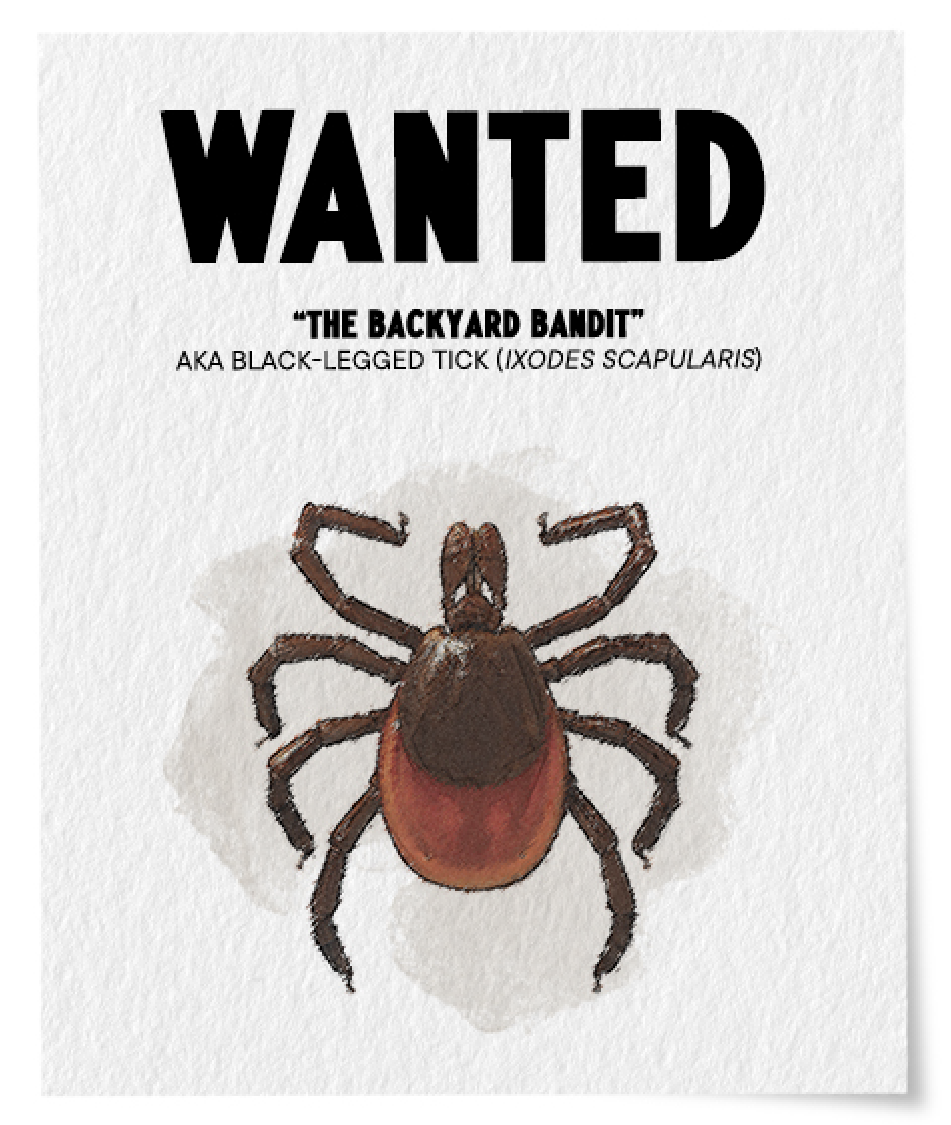
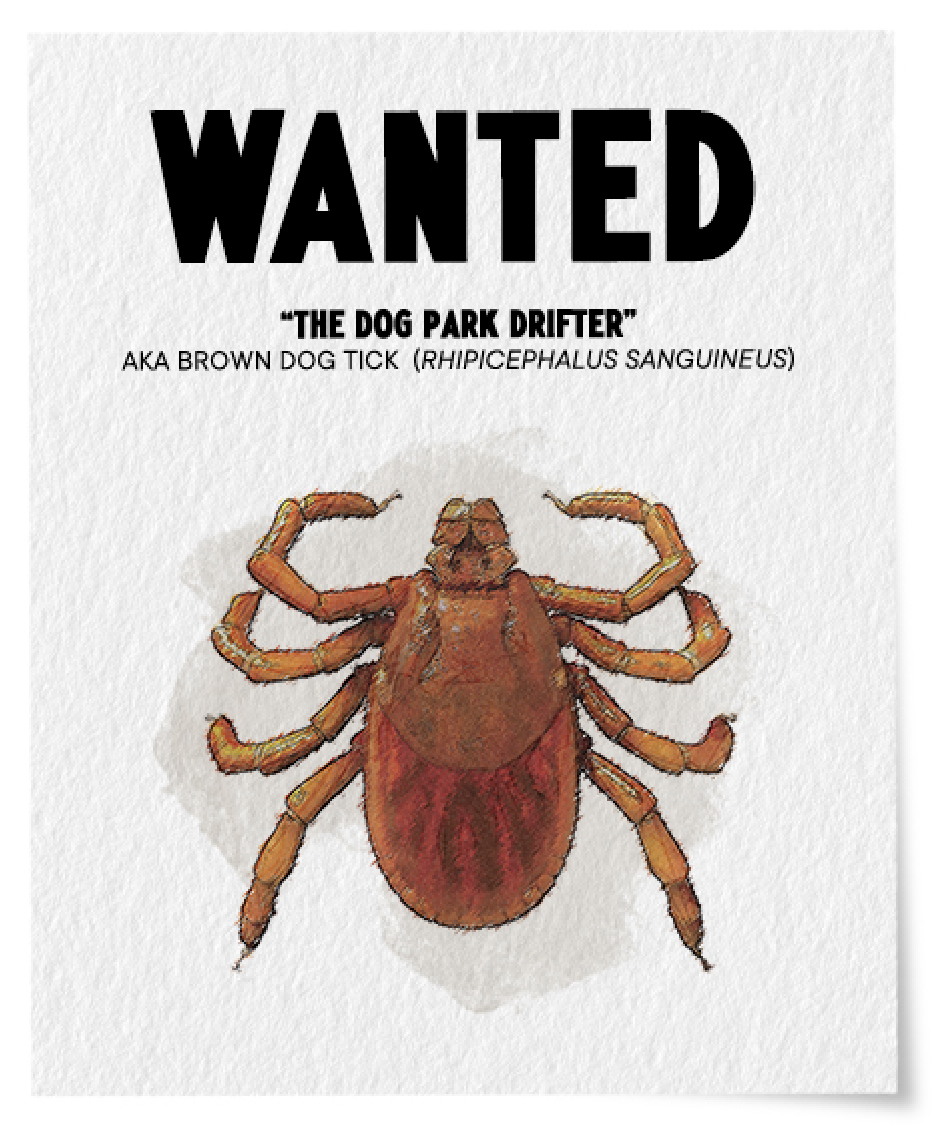
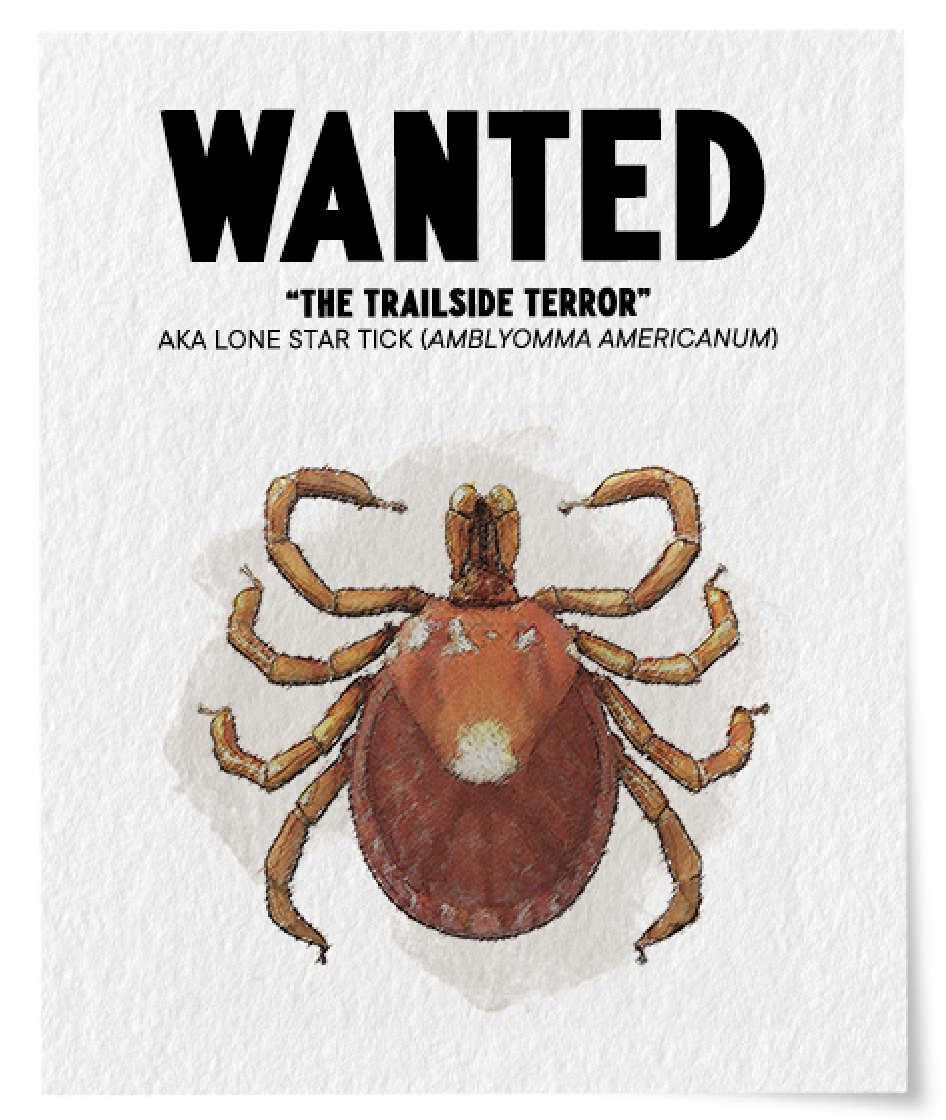
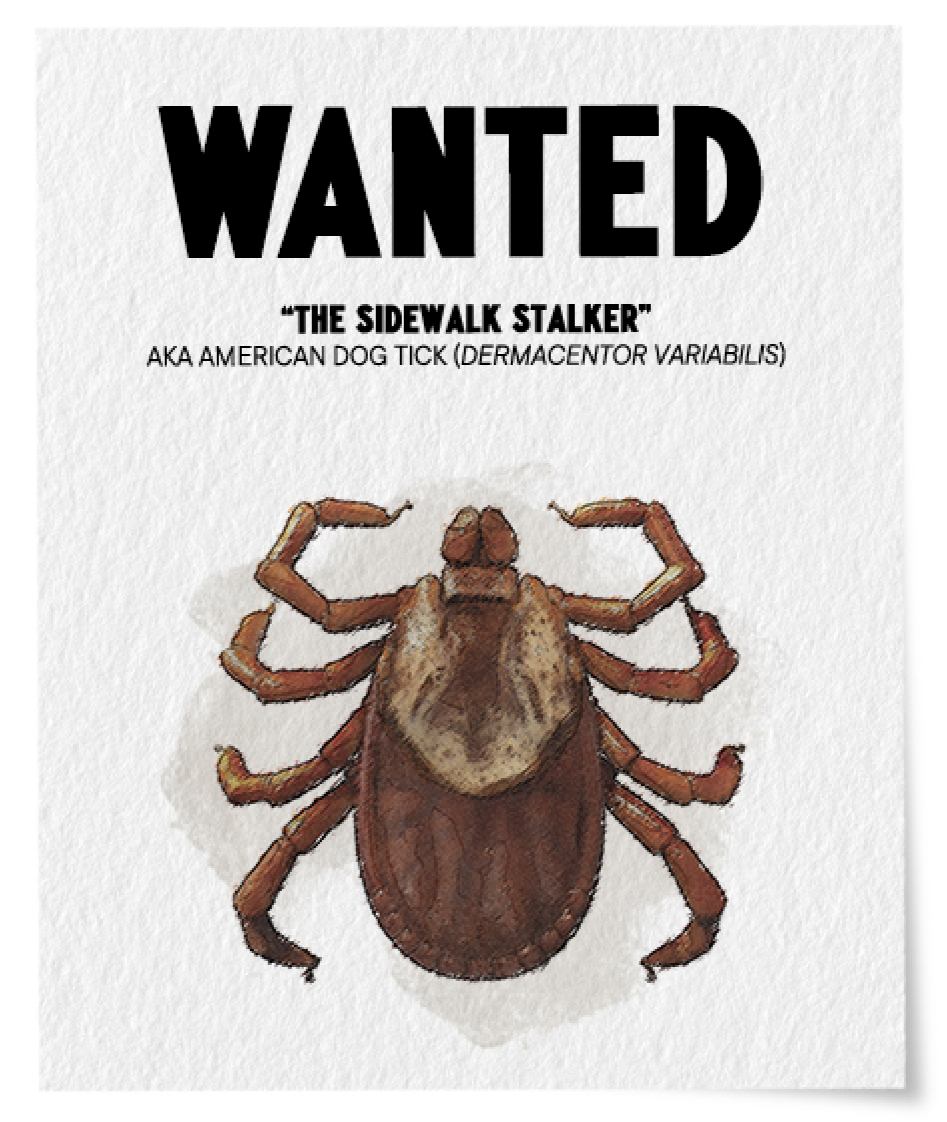
These pesky parasites are wanted for a string of offenses targeting both animals and humans without prejudice. The dangerous diseases they’re guilty of spreading include:
Lyme Disease (Pets and Humans): Primarily transmitted by the Black-legged (Deer) Tick, this notorious disease affects both pets and humans, causing fever, lethargy, and joint pain. In pets, if left unchecked, it can lead to permanent kidney damage.
Anaplasmosis (Pets and Humans): Carried by Black-legged and Western Black-legged Ticks (aka “The Backyard Bandit”), this infection is a repeat offender that can strike both pets and humans, typically causing vomiting, joint pain, and fever.
Ehrlichiosis (Pets and Humans): Spread by Brown Dog and Lone Star Ticks, this can be transmitted to pets and humans in as little as 3 hours. In pets, it often causes weight loss and breathing difficulties.
Rocky Mountain Spotted Fever (Pets and Humans): A serious bacterial threat from American Dog and Brown Dog Ticks. This is a significant danger to both pets and humans, potentially leading to skin lesions, severe fever, and multi-organ failure.
Tularemia / Rabbit Fever (Pets and Humans): Associated with Lone Star and American Dog Ticks, this bacterial disease can be contracted by pets and humans through a bite or contact with infected wildlife, leading to skin ulcers and respiratory issues.
Babesiosis (Primarily Pets): Transmitted by the Brown Dog Tick, this parasite specifically targets and destroys a pet’s red blood cells, leading to anemia, pale gums, and weakness.
Cytauxzoonosis (Cats): Commonly known as "Bobcat Fever," this deadly disease is caused by the protozoal parasite Cytauxzoon felis. While the natural reservoir host—the bobcat—typically carries the parasite without showing clinical signs, it is a severe, rapidly progressive, and frequently fatal tick-borne disease in domestic cats. It is spread by Lone Star and occasionally American Dog Ticks.
Alpha-gal Syndrome (Humans): This is a specific threat to humans. A bite from one "hitchhiking" Lone Star Tick can trigger a life-long allergy to red meat (beef, pork, or lamb). While it doesn't affect the pet's diet, an unprotected pet acts as the biological bridge that delivers this life-altering risk directly to your sofa and your family.
The evidence is clear, you know the suspects, and their crimes. Now, like a true detective, put the facts together and protect what matters most with:
Routine checks & yard maintenance: Ticks love shady, moist areas and tall grass. Keep your lawn mowed under three inches to eliminate their "questing" perches. If your property backs up to the woods or the Ozark brush, create a 3-foot-wide barrier of wood chips or gravel.
Year-round protection for your cat or dog: Ticks in NWA don't take a winter break. At Fayetteville Veterinary Care, we recommend monthly products like Credelio® Quattro to provide an uninterrupted all-in-one defense for your entire family 24/7/365.
Support from your local, independent veterinarian: Turn to Dr. Rachel Hill at Fayetteville Veterinary Care for guidance that is free from corporate influence. Dr. Hill has decades of experience, stays current on local trends, and guarantees your pets prevention 100% when you purchase from her and use as directed.
Boston Mountain Mosquito Mission: Protecting the Heart
If the tick is the "hitchhiker" of the Ozarks, the mosquito is the silent aerial assassin. In Northwest Arkansas, these buzzing pests are the primary delivery system for one of the most serious threats to your pet’s health. While many view them as a seasonal nuisance, our local climate demands a year-round strategy—one that cannot rely on guesswork, internet trends, or unproven home remedies.
Pets are family, and looking for safe, gentle ways to protect them is completely natural. Relying on homeopathic remedies, however, is a gamble with the permanent physical damage these parasites leave behind. A landmark, multi-year study of over 4 million dogs published in Frontiers in Veterinary Science (Nautrup et al., 2024) tracked 6,138 patients that successfully cleared a heartworm infection through adulticide therapy. Even after completely defeating the worms and returning to a negative status, these dogs suffered severe, life-long cardiovascular consequences.
Compared to healthy dogs, recovered patients face a 3.59x higher risk of right-sided heart failure, a 2.79x higher risk of cardiomyopathy, and a 1.83x higher risk of left-sided heart failure. Clinical data consistently proves that the physical presence of adult heartworms causes rapid, irreversible structural damage and vascular fibrosis that persists for the rest of the animal's life.
Beyond the permanent physical damage is the incredibly invasive and expensive medical regimen that pets and pet parents are exposed to. According to clinical protocols outlined by the American Heartworm Society (AHS), standard treatment requires a multi-month series of painful, deep intramuscular injections of an arsenic-based drug, paired with strict cage confinement to prevent fatal pulmonary thromboembolisms as the worms die. In severe cases, emergency surgical extraction via the jugular vein is the only option. From specialized diagnostics and pharmaceuticals to intensive monitoring, this grueling process can easily cost families thousands of dollars—a staggering contrast to the safety, affordability, and efficacy of routine prevention.
Ultimately, modern veterinary preventives remain the only reliable defense because they are legally and scientifically required to pass rigorous Target Animal Safety (TAS) and efficacy trials. To earn FDA approval, a product must consistently demonstrate near-100% efficacy in preventing larvae from maturing into adult worms under strict laboratory conditions. No supplement, essential oil, or homeopathic remedy has ever been subjected to these controlled trials, let alone passed them.
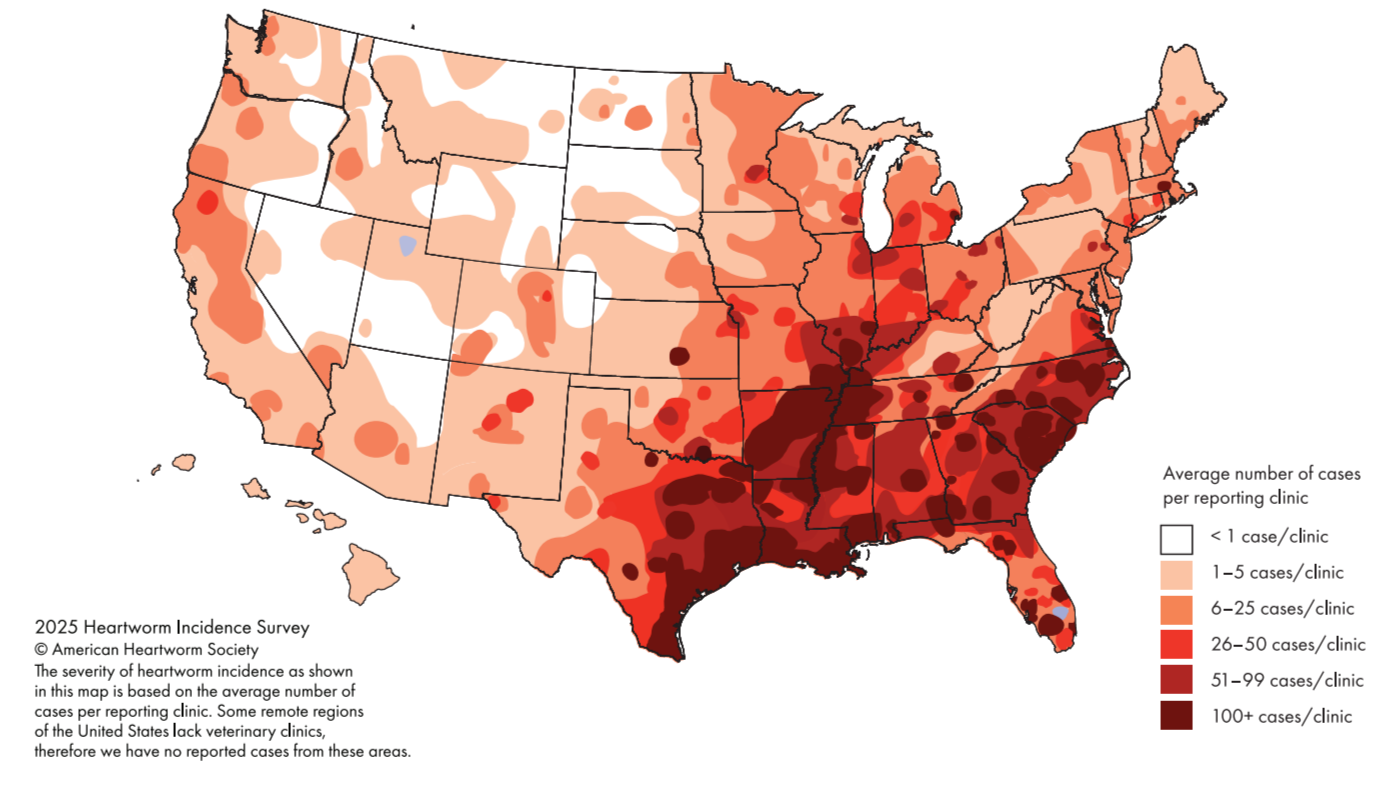
In Fayetteville, AR, your dog faces a high to extreme risk of contracting heartworms, while your cat's risk is lower but still significant. Arkansas consistently ranks in the top five states nationwide for canine heartworm incidence. According to the Companion Animal Parasite Council (CAPC), approximately 1 in 30 dogs in Arkansas tests positive for the disease. The American Heartworm Society estimates heartworm cases in our area to be significantly higher based average number of cases per reporting clinic (see map below). Cases are likely much higher as rural remote regions of the United States still lack reliable reporting.
Here is what you need to know:
Be winter thaw aware: Many owners assume winter provides a safety net, but a few warm days in a row are all a local mosquito needs to find its next meal. Because our NWA weather is so unpredictable, skipping prevention in the "off-season" leaves your pet vulnerable to a surprise warm spell.
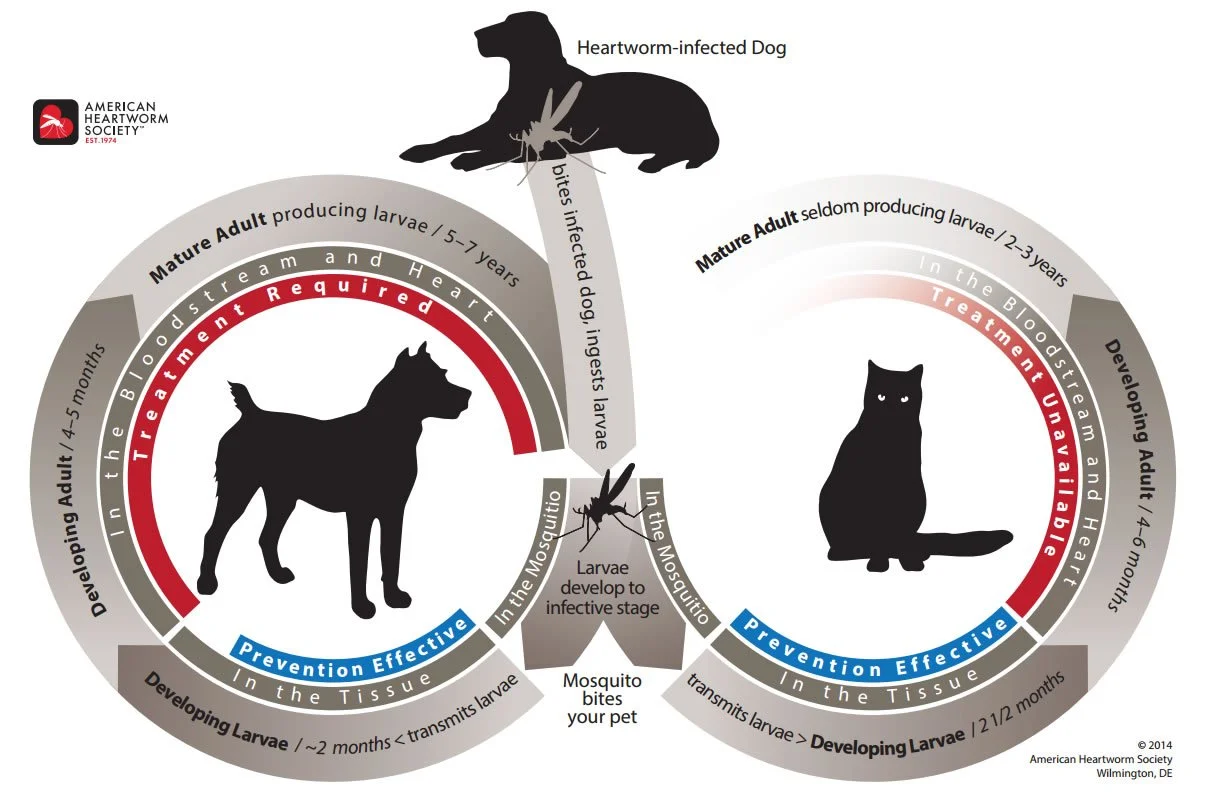
Understand hidden threats: The danger isn't just the bite; it's what happens next. Once a mosquito transmits microscopic larvae to your pet, those invaders begin a journey to the heart and lungs. From there, they mature into foot-long adult worms causing permanent, irreversible damage to your pet’s vital cardiorespiratory organs.
Beware of “Too good to be true” alternatives: Internet trends often promote supplements and oils as "natural" heartworm preventives. There is zero scientific evidence proving these work. Because heartworms are tissue-invading parasites, unproven home remedies leave your pet completely unprotected, leading to irreversible cardiac damage and costly medical bills down the road.
Seek retroactive protection: Heartworm preventives actually work retroactively by eliminating any larvae deposited by mosquitoes over the previous 30 days. This is the ultimate "safety net" for your pet.
Mind the safety gap: If you miss just one monthly dose, you create a "safety gap" that allows those larvae to mature into adult worms. Once they reach the adult stage, they are much harder, more dangerous, and significantly more expensive to treat. Keeping your pet on a strict 30-day schedule is the only way to ensure the clock never runs out on their protection.
Protect your adventure buddy!

Words worth repeating; “In Northwest Arkansas, we don’t really have a 'dead' season for parasites.” Our mild Ozark winters often see mid-January thaws that bring mosquitoes out of dormancy the moment the temperature hits 50°F, and our local tick population is notoriously hardy. This is why "year-round" isn't just a suggestion—it’s a necessity for both pets and pet parents.
Whether your dog is a dedicated trail runner at Kessler Mountain or a "professional napper" who only ventures into the backyard, outdoor exposure is a daily reality. Parasites don't distinguish between a deep-woods hike and a quick trip to the grass. Ticks can transmit debilitating diseases like Lyme or Ehrlichiosis to pets and humans in a matter of hours. At the same time, mosquitoes carry the silent, internal threat of heartworms. Whether hitchhiking on fur or flying through an open door, both make continuous protection the only reliable defense.
To keep your home and your pets safe, Dr. Rachel Hill recommends:
Continuous Coverage: Never skip a month, even in the dead of winter.
The 30-Day Rule: Administer preventives on the same day every month to ensure the "retroactive safety net" stays intact.
A "Biological Shield": Use a fast-acting product like Credelio Quattro® or Revolution Plus® to kill ticks before they can hitch a ride onto your furniture or transmit disease to your family.
Professional Guidance: Visit us at Fayetteville Veterinary Care at 1575 W Van Asche Dr, Fayetteville, AR 72704 to ensure your pet's prevention plan is perfectly tailored to our unique Northwest Arkansas climate and your pet’s lifestyle.
For Fayetteville Dogs
Credelio Quattro®: A monthly chewable that provides "all-in-one" protection against heartworms, fleas, ticks, and intestinal parasites. (see instant rebate offers below)
Bravecto®: flea and tick protection lasting 1-3 months that is perfect for heavy-duty hikers. (must be paired with a heartworm preventive like ProHeart).
ProHeart 12®: A convenient injection given at our clinic that provides continuous heartworm prevention for 12 months—no monthly pills required! (a great option for pairing with Bravecto® flea and tick protection)
For Ozark puppies:
According to the American Heartworm Society, puppies under 7 months of age can start heartworm prevention without being tested. Why? After a dog is infected it takes at least six months for a test to show positive. We recommend starting puppies on heartworm prevention at 8 weeks of age and test 1 year later and then annually because even if you have never missed a dose, heartworms can become resistant to paraciticides. It is always better for the dog to diagnose and treat heartworm disease in the early stages.
For Our NWA Cats
Revolution Plus®: A monthly 6-in-1 topical treatment that protects against heartworms, fleas, ticks, and ear mites.
Seresto Collars: Provides up to 8 months of continuous flea and tick protection for cats who enjoy the "catio" or other outdoor sunshine activities.
Spend less with rebates at your local vet!
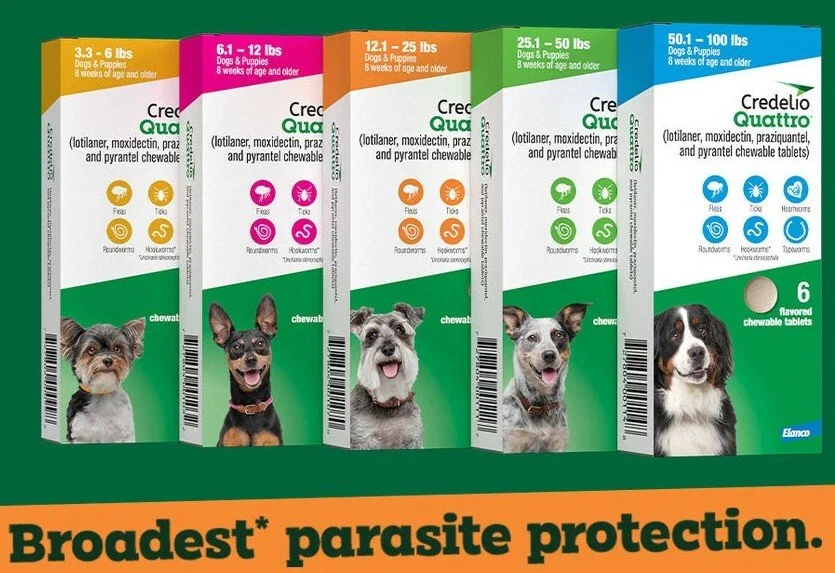
At Fayetteville Veterinary Care, we keep gold-standard care affordable for our Northwest Arkansas pet community. Take advantage of our instant rebate and reimbursement options when you buy safe and effective parasite prevention products for your cat or dog at our locally owned clinic.
All-in one prevention
Cat - Flea, Tick, Heartworm, Ear Mite, and Intestinal Parasites
Revolution Plus® 12-Month
$25 as Petcare Rewards in 5-7 days
Revolution Plus® 6-Month
$8-10 as Petcare Rewards in 5-7 days
Seresto Collars
$10–$15 Visa/Mastercard in 5-7
Dog - Flea, Tick, Heartworm, and Intestinal Parasites
Credelio Quattro® 6-Month
1 FREE Classic Kong (valued at $14)
1 FREE with purchase of 5 (valued at $45)
$25 instant rebate at checkout
($84 in total instant savings)
Credelio Quattro® 6-Month (100+lbs.)
1 FREE Classic Kong (valued at $14)
1 FREE with purchase of 5 (valued at $96)
$75 instant rebate at checkout
($185 in total instant savings)
Credelio Quattro® 12-Month
2 FREE Classic Kongs (valued at $28)
2 FREE with purchase of 5 (valued at $91)
$65 instant rebate at checkout
($184 in total instant savings)
Credelio Quattro® 12-Month (100+lbs.)
2 FREE Classic Kongs (valued at $28)
2 FREE with purchase of 5 (valued at $193)
$150 instant rebate at checkout
($371 in total instant savings)
À la carte prevention
Dog - Flea and Tick Prevention (pair with heartworm prevention)
Bravecto® 2 Doses
$20 instant rebate
Bravecto® 4 Doses
$45 instant rebate
Dog - Heartworm and Intestinal Parasites (pair with flea/tick prevention)
ProHeart 12®-Month
$30 as Petcare Rewards in 5-7 days
For established clients of Dr. Rachel Hill: all rebates are either instantly applied in clinic or reimbursed in about a week by the manufacturer. All manufacturer offers are subject to change based on availability and terms.
Schedule your pet’s Fear Free visit today!
Before starting a new prevention plan, the American Heartworm Society requires an annual heartworm test. At FVC, Dr. Rachel Hill and her team use Fear Free protocol to prevent fear, anxiety, and stress in all pet patients. That means we take extra time to ensure your pet’s visit is as low-stress as it is world-class.
Ready to protect your pet for their next Ozark adventure? Contact FVC Today:
Call: 479-348-CARE (2273)
Text: 479-777-0475
Email: care@fayetteville.vet
Visit: www.fayetteville.vet
Pet Portal: book exams, get refils, and records fast!
Ready to experience what pet healthcare should feel like from a veterinarian you can trust?
We make it easy!
Sourced from the clinical guidelines of the American Heartworm Society.
