

Keeping your pet at a healthy weight is one of the most important things you can do to support their long-term health and quality of life. Yet, it’s a challenge many pet owners face. According to a 2022 survey by the Association for Pet Obesity Prevention, 61% of cats and 59% of dogs in the United States were classified as overweight or obese, a statistic that has continued to increase in recent years.
To help us talk about pet weight management, we'd like to introduce you to Cashew, better known as Cash to his friends. (And he's never met a stranger who wasn't already a friend!)

Cash, a 3-year-old Golden Retriever, soaking up the sun while relaxing on a pool float.
In true Golden Retriever fashion, Cash has the sweetest eyes and a personality that's hard to resist when he’s asking for just one more treat. When Dr. Rachel Hill at Fayetteville Veterinary Care recommended a weight-loss plan for Cash, his owners, Alison and her family, already knew he was carrying a few extra pounds. Their immediate response was, “Okay, what's the plan?"
Their willingness to work together to help Cash become the healthiest pup he can be was the beginning of his journey. Just four months later, Cash has lost 20 pounds and has a new spring in his step!
Keep reading to learn what helped Cash succeed, discover practical tips for managing your own pet's weight, and see his incredible before-and-after transformation at the end!
Why Maintaining A Healthy Weight Matters
Pet weight management is about much more than appearance. Excess body fat puts additional strain on your pet's body and can increase their risk of several health problems, including:
Joint Problems & Arthritis: Extra weight increases the pressure placed on your pet’s joints, contributing to discomfort, joint damage, and arthritis. As movement becomes more difficult, pets may become less active, potentially creating a cycle of reduced activity and further weight gain.
Breathing Difficulties & Overheating: Excess fat around the chest and abdomen can constrict the respiratory muscles, making breathing more difficult. Overweight pets may tire more quickly during walks and playtime and are often more susceptible to overheating.
Diabetes: Obesity can contribute to insulin resistance, particularly in cats. When the body has difficulty using insulin effectively, blood sugar becomes harder to regulate, increasing the risk of diabetes mellitus.
Other Health Conditions: Excess weight can contribute to health problems involving the kidney, pancreas, cardiovascular system, urinary tract, and skin. Pet obesity has also been associated with an increased risk of certain cancers.
Shorter Lifespan: Perhaps most importantly, carrying excess weight can affect how long your pet lives. One long-term study involving Labrador Retrievers found that dogs who maintained a lean body condition lived a median of 2.5 years longer than their overweight counterparts. That’s more time for car rides, games of fetch, cuddles, and all the moments that make life with our pets so special!
How Do I Know If My Pet Is Overweight?
Determining whether your pet is at a healthy weight isn't always as simple as looking at the number on the scale. Breed, age, body structure, and muscle mass all influence what a healthy weight looks like for an individual pet.
Veterinarians often use a Body Condition Score (BCS) to evaluate whether a pet is underweight, at an ideal weight, overweight, or obese. This assessment considers several factors, including body shape, waistline definition, and how easily you can feel your pet's ribs.
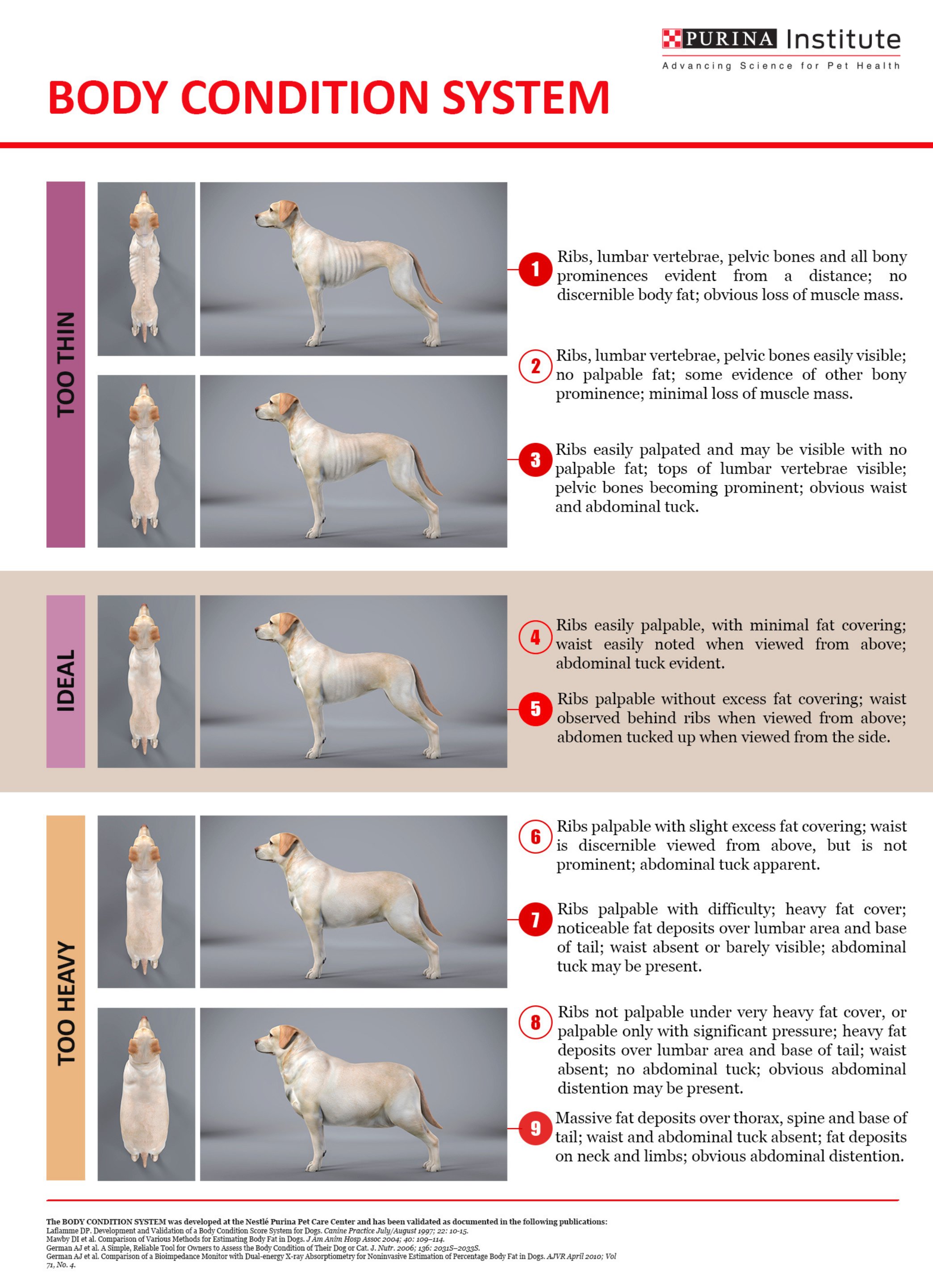
Purina 9-Point Body Condition System for Dogs
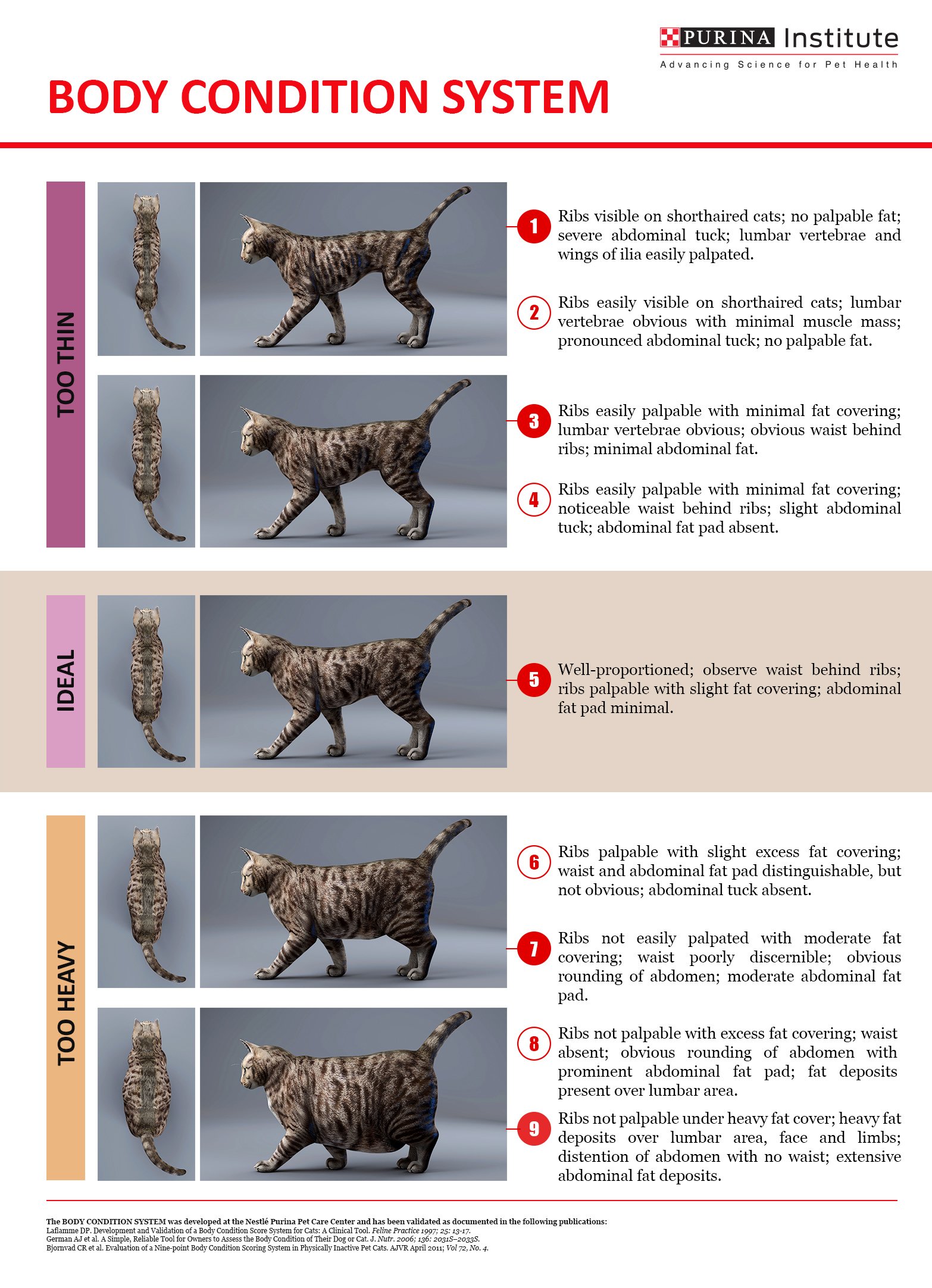
Purina 9-Point Body Condition System for Cats
If you're unsure whether your pet is carrying extra weight, your veterinary team can help evaluate their body condition and determine an appropriate target weight.
Tips To Help Your Pet Reach A Healthy Weight
When Alison and her family began working toward Cash's weight-loss goals, they focused on three important changes: adjusting his food portions, choosing healthier treats, and incorporating regular exercise into his daily routine.
Let’s break these down and explore some practical ways that you can help your pet reach and maintain a healthy weight!
1. Measure Every Meal
One of the easiest places to start your pet’s weight loss journey is with food portions. A scoop of kibble may look like the right amount, but are you measuring it accurately? Coffee mugs, drinking cups, and other kitchen scoops can hold significantly more or less than a standard measuring cup. Rather than estimating how much food goes into a serving, use an actual measuring cup or a kitchen gram scale. Be sure to account for all meals, snacks, treats, and food offered by other family members.
For Cash, lowering the amount of food he received was the first major adjustment his family made.
2. Rethink Treats and Table Scraps
We know how difficult it can be to resist those puppy eyes and sweet meows, but too many treats can quickly add unnecessary calories to your pet’s diet. Treats should generally make up no more than 10% of your pet's daily calorie intake.
Instead of eliminating rewards altogether, consider some of these alternatives:
Set aside a portion of your pet’s regular kibble to use as treats throughout the day.
Reward good behavior with praise, affection, or playtime instead of always reaching for food.
Choose lower-calorie treats that fit within your pet’s daily calorie allowance.
Limit table scraps and avoid sharing foods that aren’t appropriate for pets.
Cash’s family switched to healthier treats and scaled back the number he received each day. This small adjustment to his snack routine became an important part of his overall success.
When we asked Alison what Cash might say about his weight-loss journey if he could talk, she had a funny and relatable answer:
“Cash is happy and grateful for everything we do for him. He is a happy dog all the time. But if he could talk, he might say, I think my brothers Louie and KC are getting more food and treats than me! Why?”
Our pets don’t always understand why their routines are changing, even if it’s for the best. Stay strong, pet parents. Consistency is key!
3. Make Exercise Part of Your Routine
Regular physical activity helps pets burn calories, maintain muscle mass, and support healthy joints and cardiovascular function. Just as importantly, it provides mental enrichment and bonding opportunities.
The right type and amount of exercise will depend on your pet’s age, breed, mobility, and overall health. If your pet has arthritis, breathing difficulties, or another medical condition, check with your veterinarian before increasing activity.
For dogs, consider activities such as:
Taking short, regular walks and gradually increasing distance as fitness improves.
Playing fetch in the yard.
Scheduling playdates with compatible dogs.
Incorporating short, interactive play sessions throughout the day.
For cats, encouragement movement with:
Feather wands and toys attached to strings or poles.
Interactive toys that encourage chasing, pouncing, and exploring.
Short, frequent play sessions that mimic natural hunting behaviors.
Enrichment feeders, puzzle toys, and food mazes.
The most important thing is to choose activities your pet enjoys. Exercise should be a positive experience!
According to Alison, one of Cash’s favorite activities is playing fetch, but he has his own unique twist on the game:
“Before bringing the ball back, he always seems to think it’s the perfect time to stop, lay down, and roll around. Eventually he does bring it back. Cash is a lovable boy with a big personality who knows how to enjoy life and make everyone smile.”
Cash’s family made daily walks, visits to doggy daycare to pawty with his friends, and games of fetch a regular part of his routine. While we’re sure he still enjoys taking his sweet time rolling around before returning the ball, these extra opportunities for movement have helped him build healthier habits.
4. Create A Household Plan
When we asked Alison what advice she’d give other pet parents helping their furry family members lose weight, she emphasized the importance of having a shared plan:
“If your veterinarian recommends that your dog lose weight, it’s important that EVERYONE in the household is on board and committed to following the same plan. Consistency is key to success, and everyone must work together to ensure that feeding, treats, portion sizes, and exercise are managed the same way.”
When multiple people are involved in caring for a pet, it's easy for feeding schedules, portion sizes, and treats to get out of hand. One family member may not realize that someone else has already given an afternoon snack!
Here are some simple tips to help everyone stay consistent:
Create a shared feeding schedule so everyone knows when meals are served.
Keep track of daily food portions and treat allowances on a whiteboard in a shared space.
Store food and treats somewhere pets can’t access them on their own.
Secure trash cans and keep food scraps out of reach.
Remember, successful weight management is a team effort. When everyone works together, your pet has a much better chance of reaching their goals.
5. Work With Your Veterinary Team
Before starting a weight-loss plan, schedule an appointment with your veterinarian. They can help you create a weight management plan tailored to your pet’s individual needs.
During your appointment, your veterinarian can:
Evaluate your pet’s current weight and body condition.
Recommend a suitable diet or weight-loss management food.
Calculate appropriate daily calorie requirements and feeding amounts.
Identify medical conditions or medications that may be affecting your pet’s weight, including thyroid disease in dogs.
Establish a realistic target weight and healthy rate of weight loss.
Help determine an appropriate exercise routine.
Regular check-ins are also important. They allow your veterinarian to monitor progress, make adjustments when needed, and ensure your pet is losing weight safely while maintaining muscle mass and overall health.
Maintaining A Healthy Weight for Life
One of the best parts of a successful weight-loss journey is seeing how those changes improve your pet's everyday life. For Cash, the difference has been noticeable. Alison shared:
"After losing weight, Cash has a new spring in his step. His energy and mobility have improved. Even though Cash may not understand why, we know that helping him lose weight will make a positive difference in his overall health, especially when it comes to protecting his heart and keeping his joints healthy."
Reaching a healthy weight is a wonderful accomplishment, but maintaining that progress is just as important. Once your pet reaches their target weight, continue the habits that helped them succeed.
Your pet's nutritional needs may change with age, activity level, and overall health, so their feeding plan may need occasional adjustments. Your veterinary team can help you determine what works best at every stage of life.
Helping Your Pet Live A Longer, Healthier Life
At Fayetteville Veterinary Care, we believe preventive care is one of the most important investments you can make in your pet's future. Maintaining a healthy weight plays a key role in protecting your furry family member from preventable health concerns and helping them enjoy more happy, active years by your side.
As Cash's story shows, meaningful changes don't happen overnight. With a personalized plan, consistent habits, and support from your veterinary team, you can make a lasting difference in your pet's health and quality of life.
If you are looking for weight management advice for your pet, FVC is here to help. We can assess your pet's body condition, establish realistic goals, and create a weight-management plan that works for both your pet and your family's lifestyle.
Ready to get started? Booking an appointment is easy through our Pet Portal. Click here to schedule a visit with our team today!
A Big Congratulations to Cash!
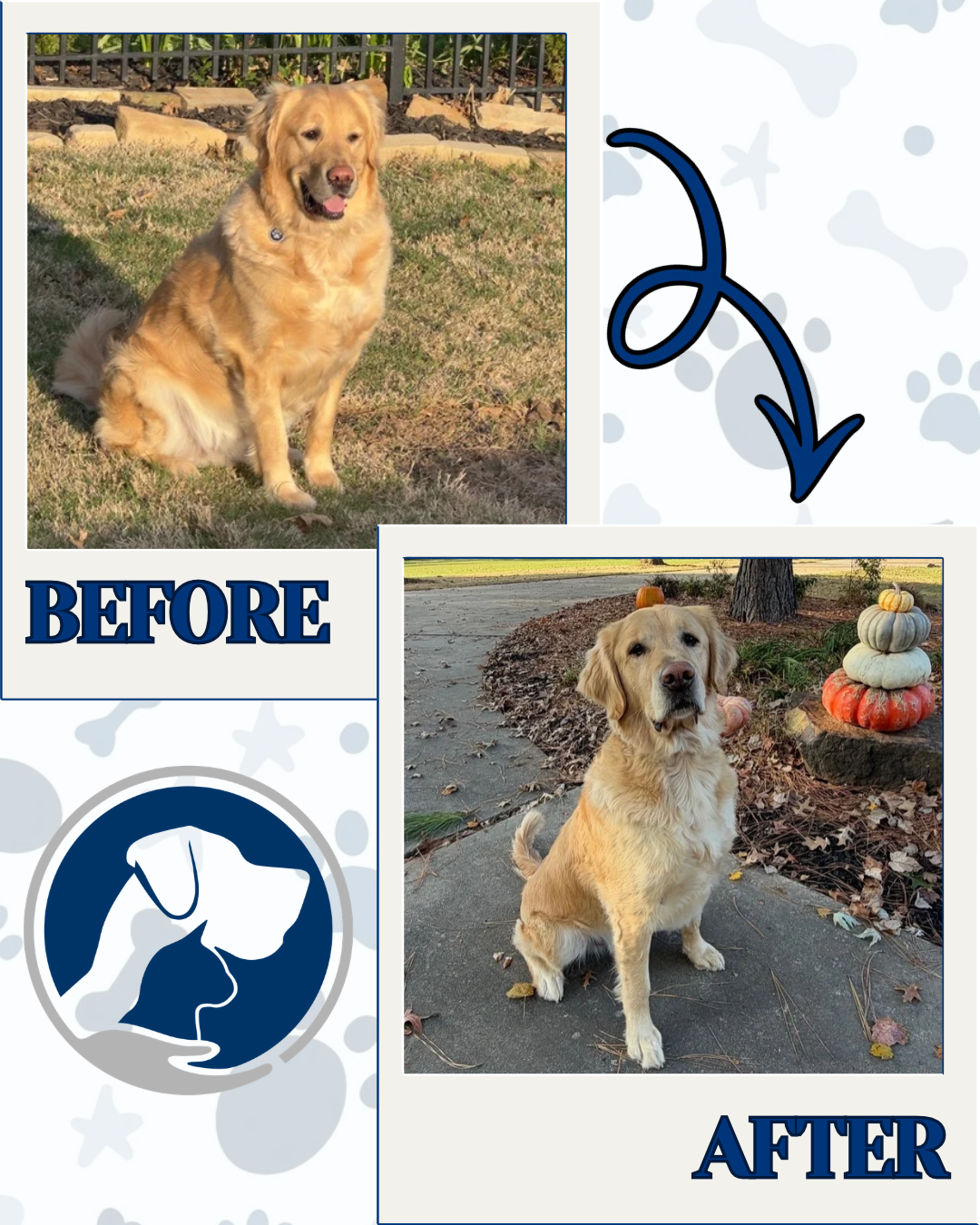
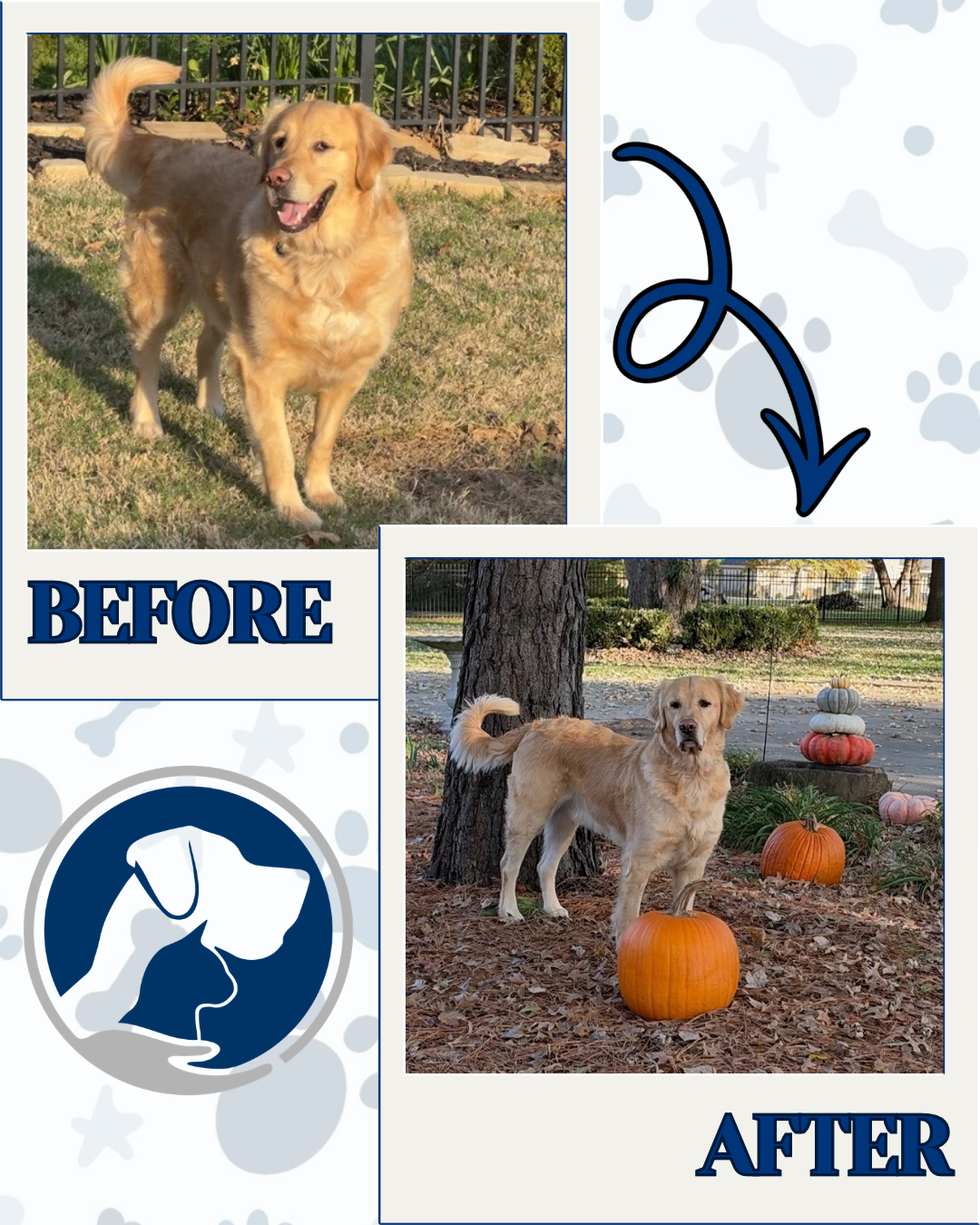
Before and after photos of Cash, a 3 year-old Golden Retriever, showing his 20-pound weight loss after following a personalized pet weight management plan with Fayetteville Veterinary Care in Fayetteville, Arkansas.
Twenty pounds in four months is an incredible accomplishment! We're so proud of Cash and grateful to Alison and her family for their dedication to helping him live a healthier life.
We can't wait to care for Cash through all the adventures, car rides, cuddles, and games of fetch still ahead. Keep up the awesome work, Cash!
