

Puppy Season Spotlight: Ash’s Story
Welcome to Puppy and Kitten Season!
March marks the start of puppy and kitten season in Northwest Arkansas. As the days get warmer, we’re getting ready to welcome lots of tiny, fuzzy faces here at Fayetteville Veterinary Care! There’s nothing quite like the energy and joy that a new furry family member brings into a home—and into a vet clinic!
To celebrate, we’re excited to introduce a very special local pup who’s already making a name for herself in our community! We’ll also share some veterinarian-approved crate training tips to help your new pup thrive.
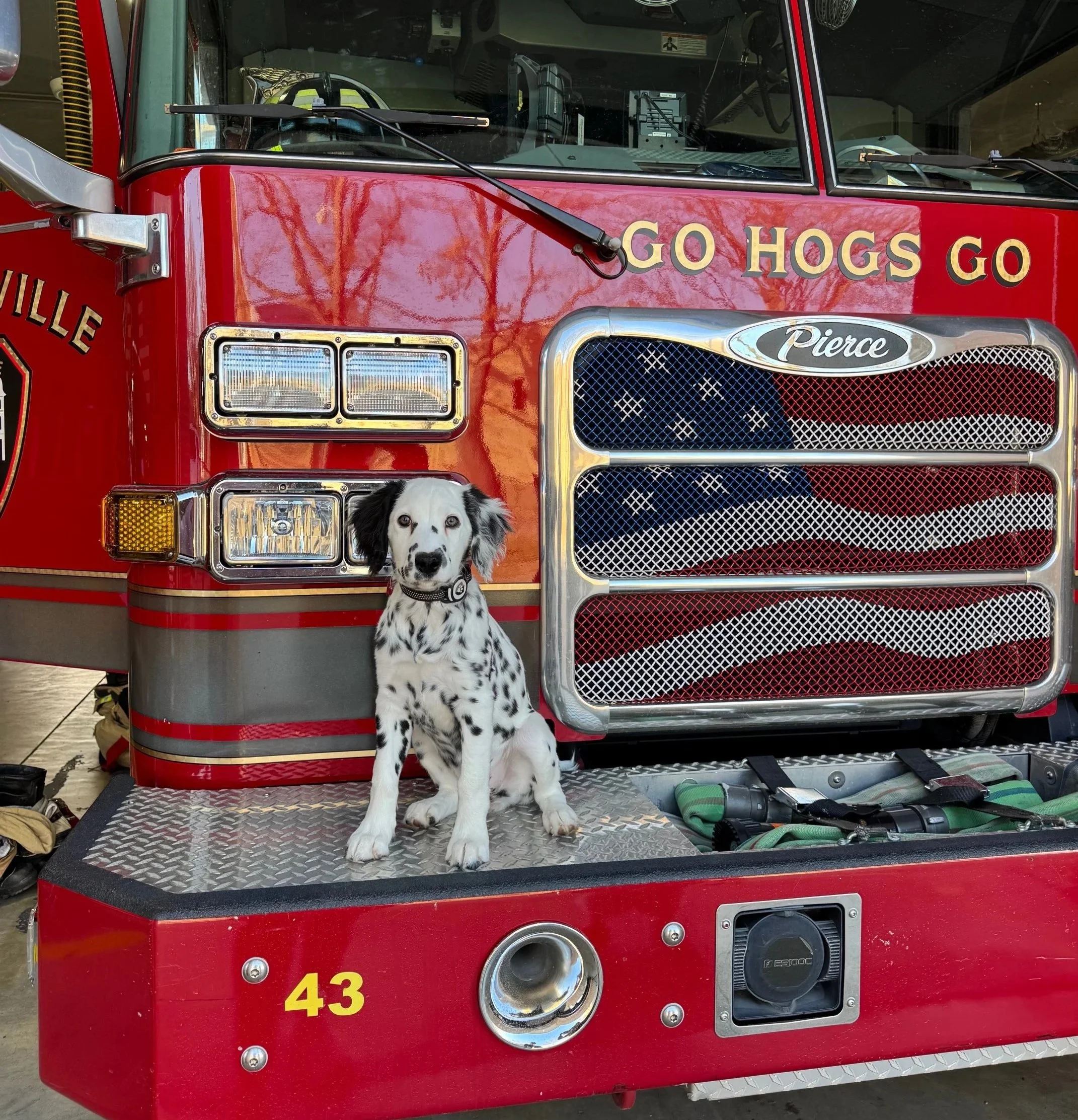
Ash, a long-haired Dalmatian puppy and Fire Education dog in training, sitting on a Fayetteville fire truck in Northwest Arkansas.
Dalmatians & the Fire Service: A 300-Year Legacy
Meet Ash, a long-haired Dalmatian puppy with a big future ahead of her. Her owners, Heidi and JD, are lifelong dog lovers, and Heidi has been a firefighter with the Fayetteville Fire Department for about a year and a half. After recently getting married and buying a home, they knew it was the perfect time to welcome a puppy into their family.
Dalmatians have been a part of the fire service for more than 300 years. In the 1700s, fire crews relied on horse-drawn wagons to transport fire fighting equipment. Dalmatians joined the team to work as “coach dogs,” running alongside the wagons to help clear the path ahead and keep horses calm and protected on the job. They were chosen for their incredible endurance, loyalty, and natural talent for bonding with and steadying horses.
Here in Fayetteville, Dalmatians have been part of the fire department tradition since the 1970s (with a few gaps over the years). While these K9 heroes used to live full-time at the station, today’s program allows firefighters to own and raise them at home.
Fayetteville Fire Dalmatians play an important role in community education and fire safety outreach. During Fire Prevention Month each October, the dogs visit schools throughout Fayetteville to help teach fire safety to children by demonstrating skills like “stop, drop, and roll” and checking doors for heat. Kids adore the Dalmatians and instantly recognize them as courageous mascots of the fire service. It’s a fun, memorable way to help fire safety lessons really stick!
Ash is currently a Fire Education dog in training, working her way up the ranks to one day join Higbee and Philli, the other Dalmatians on staff. Once she’s fully vaccinated, housebroken, and completes her training—including a big interview with the Fire Marshal where she’ll get to show off all her impressive skills—she’ll be ready to officially join the crew at the station.
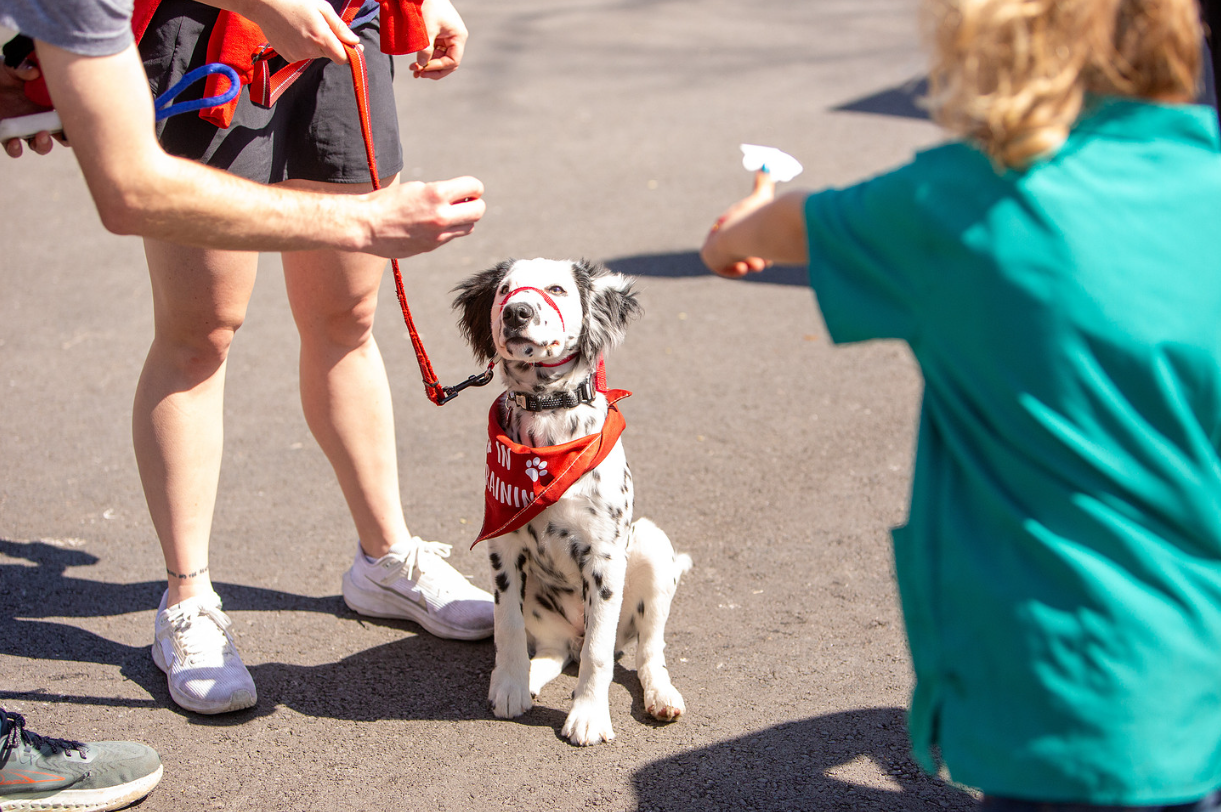
Ash practicing puppy socialization at Fayetteville Veterinary Care’s "Meet the Team" Open House event.
Raising a Confident, Well-Prepared Puppy
Training any puppy takes patience, but training a working puppy like Ash comes with additional challenges and responsibilities. Heidi shared that focus and socialization have been key to Ash’s training so far. While she follows commands reliably at home, the real test comes in busy, noisy, and unpredictable environments: think classrooms full of excited kids, blaring sirens, and all kinds of new sights and smells.
To get Ash ready for her future role, Heidi and JD make it a point to expose her to a wide range of experiences. You might spot her at the park or a community event, building her confidence in busy public spaces. She also visits the fire station regularly to get accustomed to loud sirens. To help her stay calm around children, Heidi and JD use gentle handling exercises—like playing with her ears and tail while she eats—so that she becomes acclimated to unexpected touch and activity.
Crate training has also been an important part of Ash’s routine. In Heidi’s words: “Crate training makes life easier for getting things done around the house while keeping Ash safe and out of the way. Putting her in her crate isn’t mean, it’s just a safe space for her to rest.”
While most family pets won’t need this level of training, the takeaway from Ash’s story is universal: early socialization is key to raising a well-behaved, confident dog.
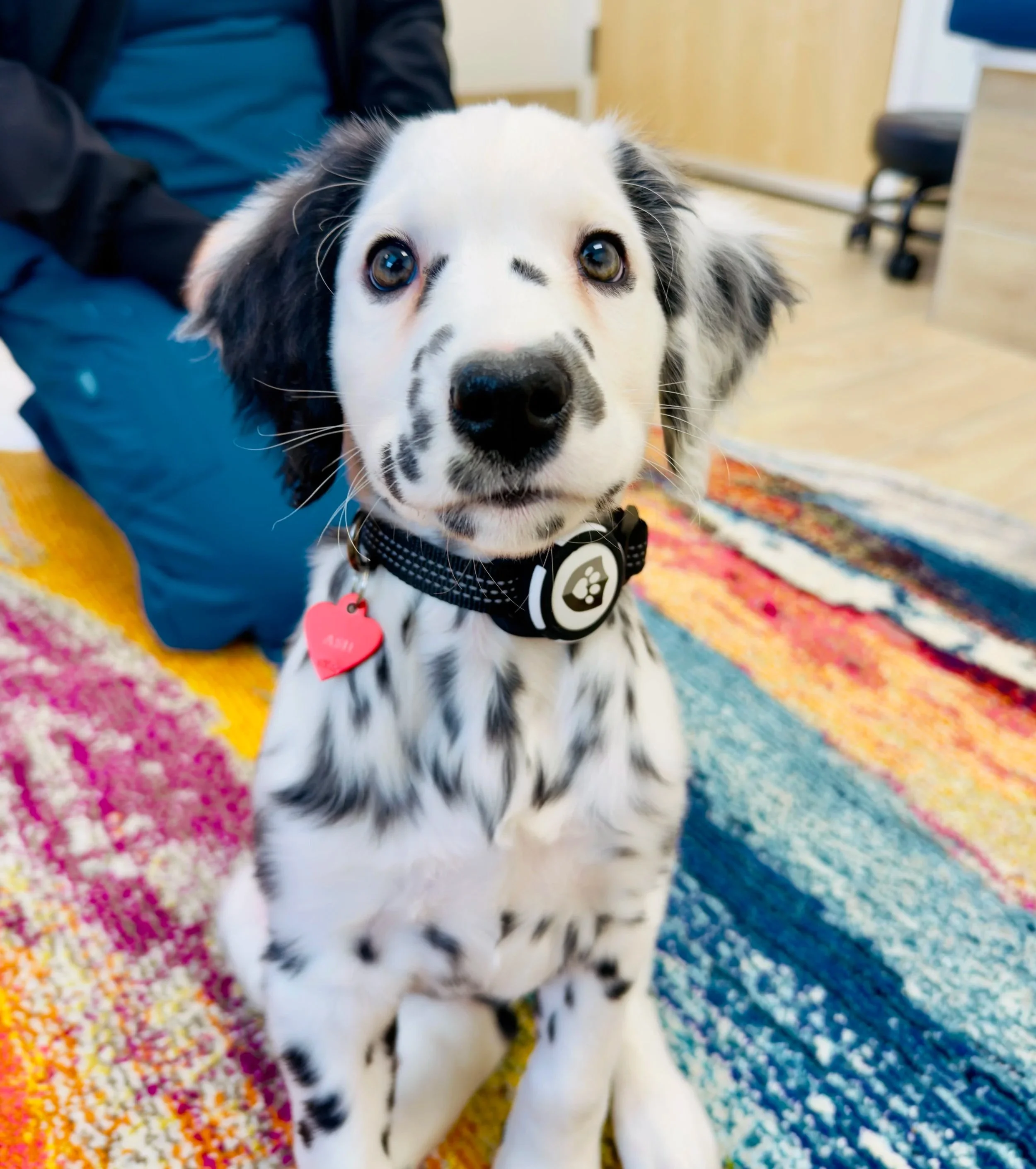
Ash at her first veterinary visit in one of our exam rooms at Fayetteville Veterinary Care in Northwest Arkansas.
FVC’s Evidence-Based Guide to Crate Training
If you’re bringing home a puppy this season, crate training is one of the most effective tools for early puppy care and behavior development. Dogs are naturally den animals. They instinctively seek out small, safe spaces to rest and recharge. Done the right way, a crate becomes your puppy’s personal retreat. Crate training helps:
Support potty training, since most dogs won’t eliminate where they sleep and eat
Provide a safe, cozy space for your puppy to go when feeling overwhelmed
Prevent destructive or unsafe behaviors when your puppy is unsupervised
Create structure and routine in your puppy’s day
To make crate training easier for you and your new furry family member, we’ve rounded up some tried-and-true tips and tricks, all backed by veterinary science.
Choose the right size
The crate should be just big enough for your puppy to stand, turn around, and lie down comfortably. Too much space can lead to accidents as your dog may try to potty in one area and sleep at the other end.
Take it slow
To help your puppy get comfortable with the crate, start by tossing treats inside and letting them explore at their own pace. Repeat this several times a day, rewarding them each time they go in. Once your puppy seems relaxed, gently close the door for a few seconds, offering a treat through the door before opening it again. Gradually extend the time, making sure your puppy has gone potty beforehand, and keep all sessions short and positive.
Build independence gradually
Practice crate time during everyday activities, like watching TV or cooking. At first, stay nearby so your puppy can see you and feel secure. Once they’re comfortable, try briefly stepping out of the room. Always return before your puppy becomes anxious, and be sure to reward calm, relaxed behavior.
Create positive associations
Feeding meals in the crate and using it for naps and bedtime helps build a strong, positive association. You can also offer a special chew toy that’s only for crate time. Make sure the toy is durable and appropriately sized to prevent choking, so your puppy can safely enjoy it while unsupervised.
Follow the time rule
A good guideline: your puppy’s age in months + 1 = max hours in crate during the day
Example: A 2-month-old puppy → no more than 3 hours of confinement at a time
Never use the crate as punishment
The crate should always feel like a safe, calm space—not a timeout zone for bad behavior. You don’t want your pup to associate their new den with times of stress or fear. Remember that confinement can be scary and frustrating for your new puppy. If your puppy becomes distressed, shorten their confinement time and build back up gradually.
At Fayetteville Veterinary Care, we know raising a puppy or kitten is exciting—but it can also feel overwhelming at times. Our team is here to support pet owners across Fayetteville and Northwest Arkansas with expert, compassionate care.
At your first puppy or kitten visit, you’ll receive a complimentary baby gift packed with helpful goodies, including:
Veterinarian-approved educational resources on training, nutrition, behavior, and more
A toothbrush to kickstart early dental health
A sample of flea, tick, and heartworm prevention
Preventive care is at the core of everything we do, and we’re committed to helping your newest family member grow into a happy, healthy companion. Whether your puppy or kitten is destined to be a community hero like Ash or simply your couch-loving best friend, the journey starts with patience, consistency, and a whole lot of love.
Ready to experience what pet healthcare should feel like from a veterinarian you can trust?
We make it easy!
